



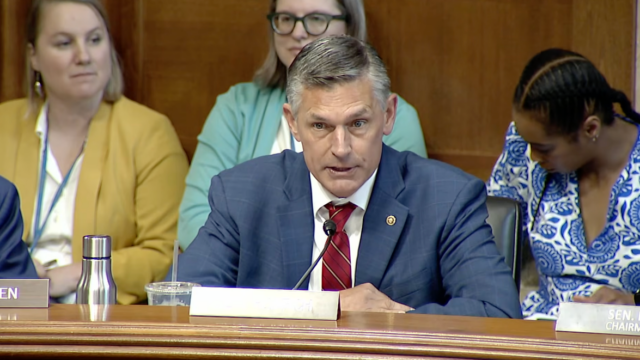
U.S. Sen. Martin Heinrich criticized Senate Energy and Natural Resources Committee leadership Wednesday for leaving conservation and public lands bills off the committee’s vote list, including his own Gila River legislation.
The story continues from our friends at Organ Mountain News
Heinrich, D-N.M., the ranking member of the committee, made the comments during a business meeting to consider pending legislation. He criticized Chairman Mike Lee, R-Utah, for advancing Republican priorities while Democratic and bipartisan conservation bills were not scheduled for votes.
“While I am always glad to see good legislation move through this committee, I am disappointed we have yet another business meeting where we are considering zero conservation bills,” Heinrich said.
Ranking Member @SenMartinHeinrich leads Energy Democrats in a hearing to consider pending legislation and oversight of the Colorado River Basin. (U.S. Senate Democrats / YouTube)
Heinrich said several bills that previously advanced through the committee with bipartisan support were again left without votes, including U.S. Sen. Ron Wyden’s Oregon Recreation Enhancement Act, U.S. Sen. Catherine Cortez Masto’s Ruby Mountains Protection Act and Heinrich’s M.H. Dutch Salmon Greater Gila Wild and Scenic Rivers Act.
“My own Gila River bill has been reported twice, with bipartisan support, but will not receive a vote today,” Heinrich said.
He also pointed to U.S. Sen. Alex Padilla’s San Joaquin River Restoration Settlement Act, saying it had previously moved as part of a bipartisan pair with a Dakota water resources bill sponsored by U.S. Sen. John Hoeven, R-N.D. Heinrich said Hoeven’s bill would receive a vote while Padilla’s would be left behind.
Heinrich also criticized the committee for not voting on U.S. Sen. Chris Van Hollen’s bill to establish the Justice Thurgood Marshall School as an affiliated area of the National Park System, while considering another affiliated-area bill for sites in Mississippi.
“This is not about controversial or noncontroversial,” Heinrich said. “It’s about being responsive to what members’ priorities actually are.”
Heinrich said the committee has few weeks of legislative business left in this Congress and urged members to seek collaboration and compromise.